Horn Trimming: An Important Layer of Rhino Protection
For anyone seeing a rhino without its horn for the first time, rhino horn trimming can be difficult to understand. Why would a conservation organisation remove part of a rhino’s horn?
The answer begins with the threat rhinos continue to face in the wild. Rhino horn remains highly valuable on the illegal wildlife market, making rhinos a target for poachers. At Care for Wild, horn trimming is one part of a much broader protection strategy designed to reduce that risk.
It is not a decision that is taken lightly. It is a highly controlled, specialist procedure, carefully planned around the welfare of each rhino.
What is rhino horn trimming?
Horn trimming, previously often referred to as dehorning, is the controlled removal of a portion of a rhino’s horn.
Rhino horn is made primarily of keratin, the same structural protein found in human fingernails and hair. The portion of horn that is safely removed can grow back over time.
The purpose of horn trimming is not to harm or permanently alter the rhino. It is a security measure intended to reduce the incentive for poachers to target an individual animal.
Why does Care for Wild trim its rhinos’ horns?
Care for Wild is responsible for the protection of a large population of rhinos, many of whom have already survived the loss of their mothers to poaching. Protecting these rhinos means looking at every available layer of security.
Our approach includes experienced protection teams, rhino monitors, rangers, K9 and mounted units, technology and horn trimming. Removing the majority of the horn reduces its value to a potential poacher and can make an individual rhino a less attractive target.
How is rhino horn trimming carried out?
Horn trimming is a strictly controlled and regulated procedure and is carried out under specific permits by qualified, registered wildlife veterinarians with an experienced support team.
Before the procedure, each rhino is assessed and the veterinary team plans the immobilisation and procedure according to the individual animal.
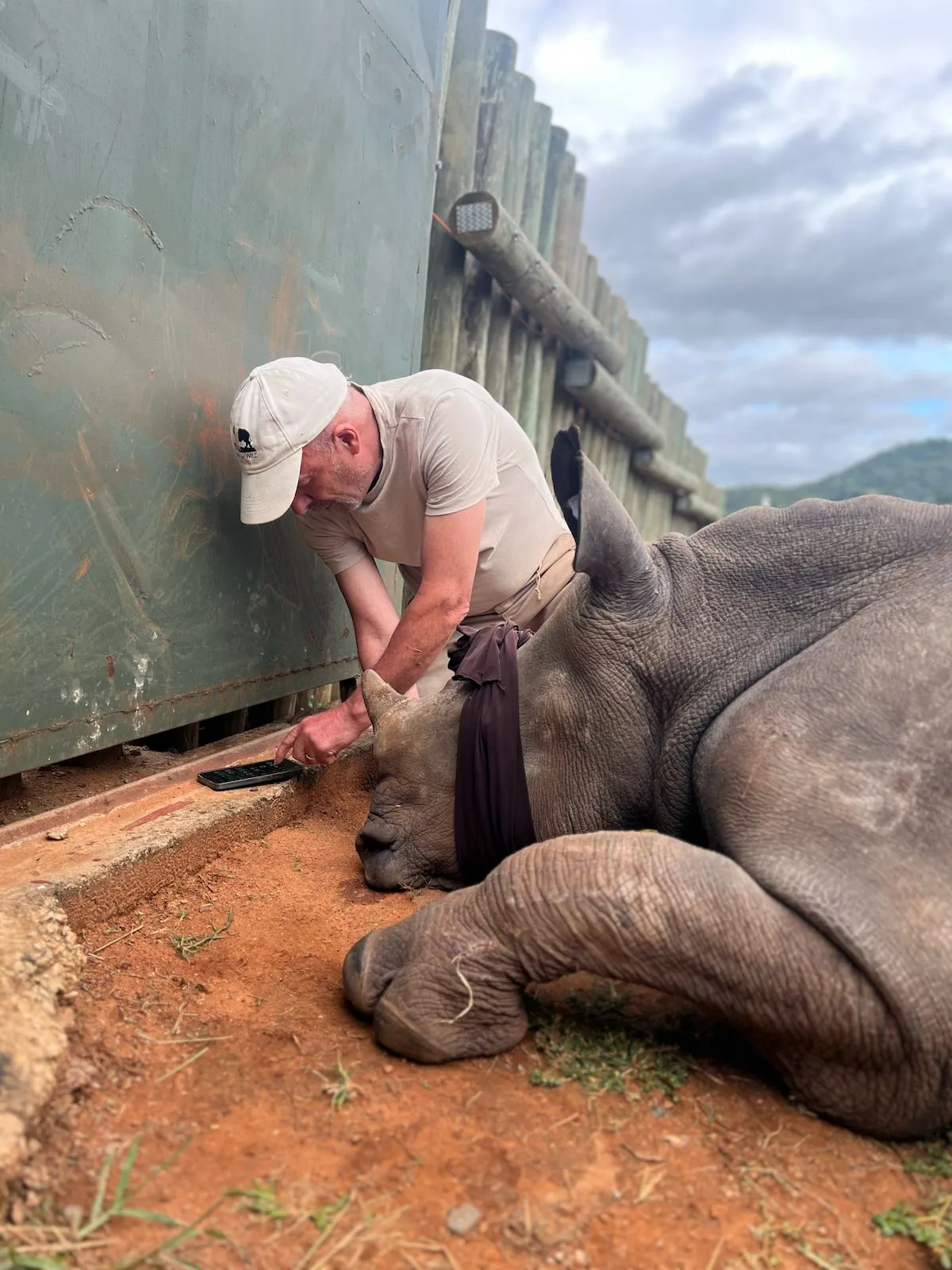
Once the rhino is safely immobilised, a highly trained team places a blindfold and earplugs to remove visual and auditory stimulation. Supplementary oxygen is also given and the rhino’s respiratory and vital signs are monitored throughout. The horn is carefully marked to establish the appropriate point at which it can be trimmed. Only the necessary portion of the horn is removed using a chainsaw, leaving a protective margin rather than cutting down to the sensitive tissue at its base.
The cut surface is then smoothed with a grinder so that there are no sharp edges that could injure the rhino itself or another animal.
The procedure itself is relatively quick, but the veterinary care surrounding it is just as important. The team monitors the rhino throughout immobilisation and during recovery, ensuring that the animal is stable before it is returned to its normal environment.
What happens to the horn?
The removed horn is not sold or used commercially.
At Care for Wild, the horns remain the property and responsibility of the relevant conservation authority and are removed from the sanctuary following the procedure.
This is an important part of the process. Horn trimming is carried out for conservation and security purposes, not to create a source of horn.
What happens after the procedure?
Once the trimming is complete, the veterinary team continues to monitor the rhino as it recovers from immobilisation.
The animal is given the time and space needed to recover before returning to its normal routine.
For the rhino, life continues much as it did before. It will eat, move, socialise, establish relationships and, where appropriate, continue progressing through the rehabilitation and rewilding programme.
And as the horn grows, it is monitored as part of the rhino’s ongoing care.
Horn trimming is only one layer of protection
It is important to understand that horn trimming does not make a rhino safe on its own.
A dehorned rhino can still be poached. Small amounts of horn remain, and regrowth begins immediately. More importantly, poaching is not simply a problem that can be solved by removing the object that makes a rhino valuable.
That is why Care for Wild uses a layered approach to protection.
Rangers, monitoring systems, technology, intelligence, protected landscapes, veterinary teams, conservation partnerships and community involvement all have a role to play.
Horn trimming is one tool within that system.
The aim is simple: make the rhino a less attractive target, while strengthening every other layer of protection around it.
Protecting rhinos for the future
Every rhino that arrives at Care for Wild represents a story that could have ended very differently.
Many of our rhinos were orphaned because their mothers were killed by poachers. Their rehabilitation is therefore about much more than helping an individual animal recover. It is about giving that rhino the opportunity to become part of a future wild population.
Horn trimming may seem confronting, but within the reality of the poaching crisis it is a preventative measure designed to protect the life of the animal.
The goal is not simply to keep a rhino alive today.
The goal is to protect it long enough to return it to the wild, where it can live as a rhino should, contribute to a healthy ecosystem and, one day, produce the next generation.
That is why every layer of protection matters.
Frequently asked questions about rhino horn trimming
Who carries out rhino horn trimming?
Horn trimming is carried out by qualified, registered wildlife veterinarians with an experienced support team, under specific permits. Before the procedure, each rhino is assessed and the veterinary team plans the immobilisation and procedure around the individual animal.
How is a rhino cared for during horn trimming?
Once the rhino is immobilised, a blindfold and earplugs remove visual and auditory stimulation, supplementary oxygen is given, and respiratory and vital signs are monitored throughout. The team keeps monitoring during recovery until the rhino is stable and returned to its normal environment.
What happens to trimmed rhino horn?
The removed horn is not sold or used commercially. It remains the property and responsibility of the relevant conservation authority and is removed from the sanctuary. Horn trimming is carried out for conservation and security purposes, not to create a source of horn.
Does rhino horn trimming stop poaching?
Not on its own. A dehorned rhino can still be poached, because small amounts of horn remain and regrowth begins immediately. Care for Wild uses a layered approach of rangers, monitoring systems, technology, intelligence, veterinary teams and community involvement, with horn trimming as one tool within it.
Help protect every layer of a rhino’s safety
Your donation directly funds the daily care, food, veterinary treatment and 24/7 protection of our orphaned rhinos.
Donate to protect rhinos
More ways to get involved: Donate · Adopt a rhino · Volunteer · Stay at Rhino View Lodge
