From Kruger Orphan to Wild-Born Mother: Satara’s Journey
Satara, the first Kruger orphan rhino brought to Care for Wild in 2014, has given birth to her first wild-born calf. She and her calf now live in an intensive protection zone, monitored and guarded 24 hours a day.
A full circle moment for rhino conservation in South Africa. Satara, the very first white rhino orphan rescued from the Kruger National Park in 2014 and entrusted to Care for Wild Rhino Sanctuary, gave birth to her first calf on 17 May 2026.
As Kruger National Park celebrated 100 years since their establishment as the first National Park in South Africa on 31st May 1926, this birth stands as a powerful reminder of what can be achieved when people and organisations come together to protect South Africa’s natural heritage for future generations.
“For over a decade, the rhino has been seen as a symbol of crisis in South Africa, but the birth of this new rhino life is changing that narrative. No longer inheriting a war against poaching, these calves are wild-born and growing up in the love, safety, and care of their rhino mothers. This brings so much hope to the people of South Africa and the world. Some moments remind us why we never gave up. This is one of them.” — Petronel Nieuwoudt
The 2014 poaching crisis and the SANParks partnership
In 2014, South Africa faced the devastating peak of the rhino poaching crisis, with 1,215 rhinos killed in a single year. Amidst this crisis, South African National Parks (SANParks) made a bold and compassionate decision for the future of Kruger’s rhinos, choosing to rescue and rehabilitate orphaned rhino calves rather than leave them behind as victims of poaching.
For the first time, SANParks entered into a Memorandum of Agreement (MOA) with Care for Wild Rhino Sanctuary, entrusting Petronel Nieuwoudt and her team with the rehabilitation, rewilding, and long-term protection of Kruger’s injured and orphaned rhinos. It became a partnership built on trust, shared purpose, and a relentless commitment to ensuring that these animals would one day have a future back in the wild.
Satara’s rescue from Kruger
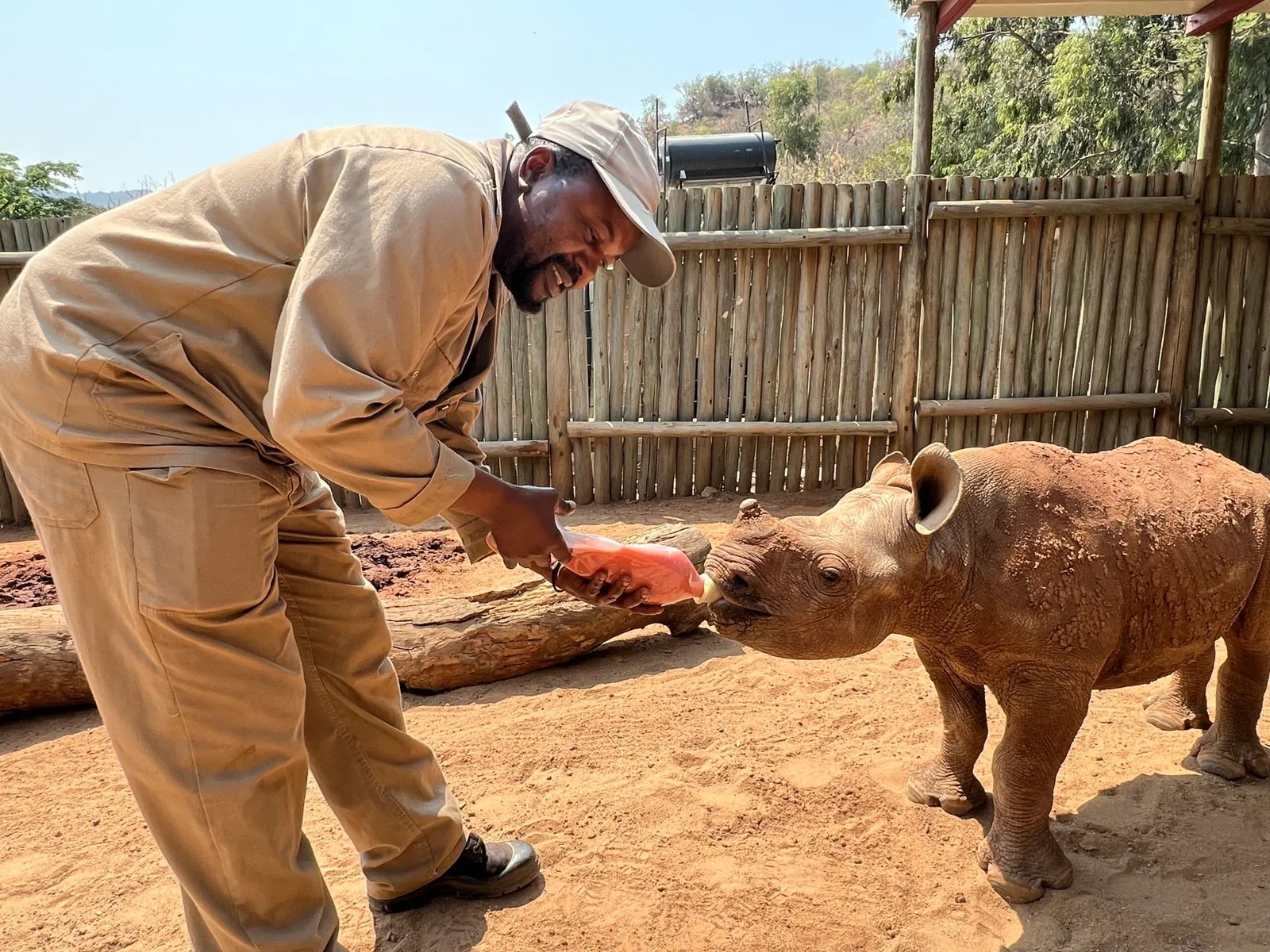
On 11 March 2014, a tiny seven-month-old calf became the very first rhino orphan rescued from Kruger National Park and brought to Care for Wild after rangers found her standing beside the body of her poached mother. Petronel went to collect her from the park, where Kruger’s veterinary teams and rangers had already placed her on life support and stabilising drips, fighting to keep her alive. She was given the name Satara so that she would always remain connected to her home and where she came from.
When Petronel answered that call for help, she never imagined the journey that lay ahead. She never imagined that Satara would become the first of 135 rhinos rescued.
A wild-born calf, twelve years later
Twelve years later, Satara’s story has come full circle. After years of healing, rehabilitation, and rewilding, she has given birth to her very first calf in the wild. We are so so proud of her.
Today, Satara and her calf live together in an intensive protection zone where they are monitored, guarded, and kept safe 24 hours a day. It is because of this ongoing protection, and the collective effort behind it, that Satara is able to raise her calf safely in the wild, as every rhino mother should.
Satara’s story, along with the 33 other rhino calves born at Care for Wild, is living proof that collaboration, compassion, and long-term commitment can turn tragedy into hope.
Frequently asked questions about Satara
Who is Satara the rhino?
Satara was the first white rhino orphan rescued from Kruger National Park and brought to Care for Wild, on 11 March 2014. She was seven months old when rangers found her beside her poached mother, and she became the first of 135 rhinos rescued.
When did Satara give birth?
Satara gave birth to her first calf on 17 May 2026, twelve years after her rescue. She and her calf now live together in an intensive protection zone where they are monitored, guarded and kept safe 24 hours a day.
Why did SANParks partner with Care for Wild?
In 2014, with 1,215 rhinos killed in a single year, SANParks chose to rescue and rehabilitate orphaned calves. It entered a Memorandum of Agreement with Care for Wild for the rehabilitation, rewilding and long-term protection of Kruger’s injured and orphaned rhinos.
Rhino adoption is one of the most personal ways to support Care for Wild
Your adoption helps provide ongoing support while giving you a meaningful connection to an individual rhino’s journey.
Adopt a rhino
More ways to get involved: Donate · Adopt a rhino · Volunteer · Stay at Rhino View Lodge
